


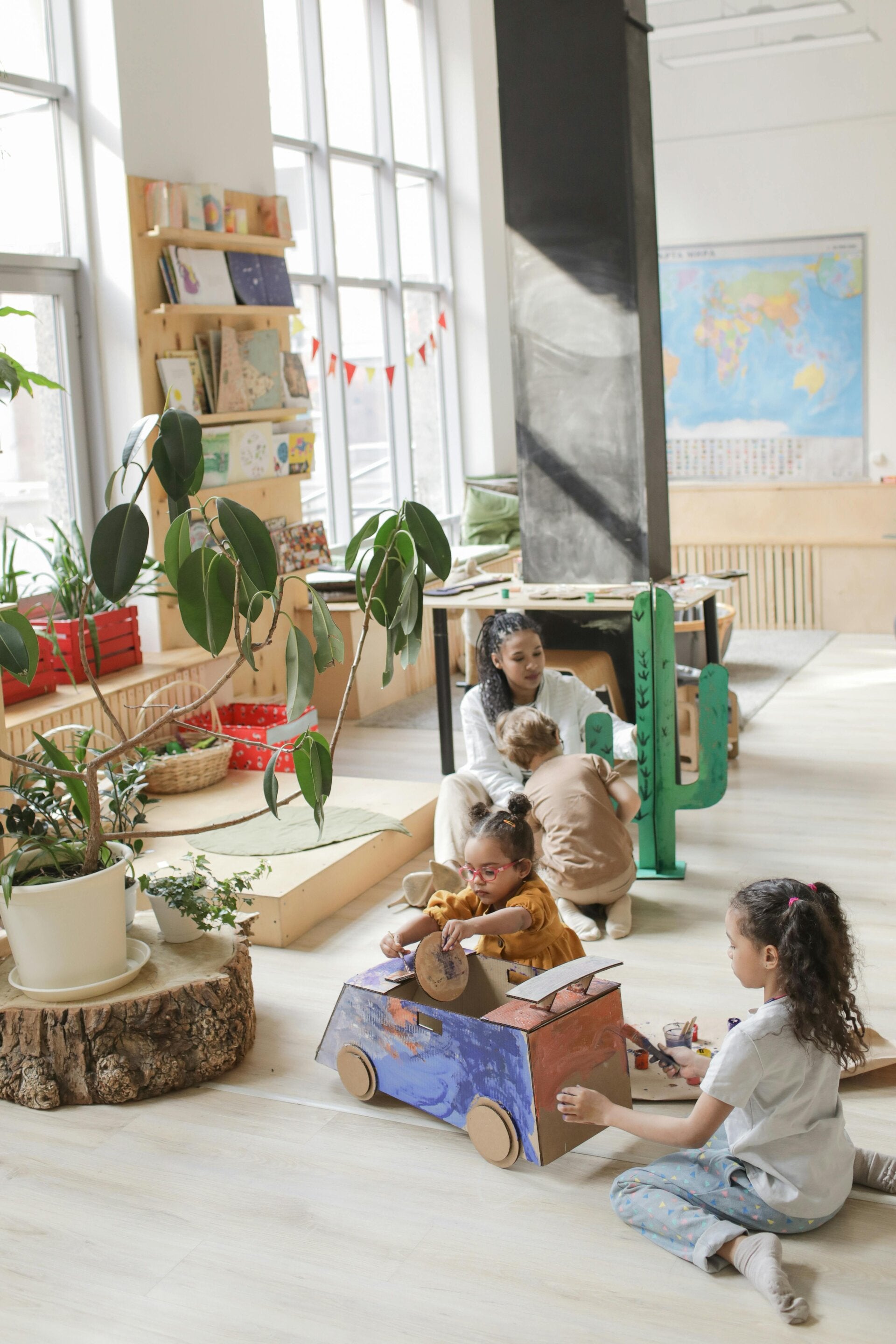
If you’ve ever stepped from a German Kita into a British childcare setting, you’ll know it feels a bit like switching TV channels mid‑episode. Same children, same needs… completely different vibe. German childcare is all about freedom, space, and letting children get gloriously muddy, while British settings often lean towards themes, activities, and adult‑curated learning moments — sometimes with a laminated label stuck on top for good measure.
Think of it like this: if British childcare is a colour‑coded Pinterest board, German childcare is a child turning a stick, a puddle, and a hill into a full‑blown engineering project — no adult approval required. One country loves a themed setup, the other loves a good mud stain. And honestly, both approaches say a lot about what each culture believes children actually need.
Growing up in Germany, I was used to Kitas where children wandered freely between rooms, drifted in and out of activities, and spent half the day outside regardless of the weather. There was a real sense of trust — trust that children know what they need, trust that play doesn’t have to be orchestrated, and trust that a bit of dirt never hurt anyone. The environment was simple but rich: natural materials, open shelves, cosy corners, and big outdoor spaces that encouraged climbing, digging, and exploring. Adults were present, but not hovering. They stepped in when needed, but mostly they observed, supported, and let the children get on with being children.
Then you walk into a British setting and the contrast hits you immediately. It’s colourful, creative, and beautifully organised. There are themed corners, labelled baskets, and activities that look like they’ve been designed by someone with a secret Pinterest addiction. British practitioners put an incredible amount of effort into making learning visible and engaging. There’s a real sense of artistry in the way environments are set up. But with that comes more adult direction. The day often follows a structure, activities are planned, and the flow of play is gently steered by grown‑ups rather than led entirely by the children.
Neither approach is wrong — they just come from different cultural beliefs about childhood. Germany leans heavily into independence, outdoor life, and long stretches of uninterrupted free play. Britain leans into creativity, structure, and offering children a wide range of experiences. Germany says, “Let’s see what happens,” while Britain says, “Here’s something exciting to try today.”
What’s interesting is how these differences shape the children’s day. In Germany, play spills everywhere — across rooms, into gardens, under tables, behind bushes. Children mix materials, invent games, and build worlds from scratch. In Britain, play often happens within beautifully prepared spaces that guide the child’s imagination in a certain direction. It’s still playful, still joyful, but a little more curated.
Both systems have strengths. Germany gives children space to breathe, move, and make decisions. Britain gives children inspiration, variety, and environments that feel magical. And honestly, the sweet spot is probably somewhere in the middle — a place where children have freedom and creativity, structure and autonomy, mud and imagination.
What both countries get right, in their own ways, is that children learn best when they’re seen, heard, and given time to explore. Whether it’s a German forest or a British craft table, the heart of good practice is the same: children need space, trust, and adults who genuinely understand them.
Add comment
Comments